
Best Glass Cleaner: How to Pick the Right One for Windows, Mirrors and Shower Doors
Ask ten people for the best glass cleaner and you will get ten different answers. I have tried most of them — the blue spray from the supermarket, the fancy foam, the homemade vinegar mix, and plain water with a good cloth — and here is the honest short answer: there is no single best glass cleaner. The best one depends on the glass in front of you.
For most windows and mirrors, the winner is the vinegar mix from my kitchen. It costs under 25 cents a bottle, has no ammonia, and leaves nothing behind to streak. But it is not the best choice for everything. Tinted car windows, shower doors coated in soap scum, and glass that has not been cleaned in a year each want something a little different.

What makes a glass cleaner the best?
A cleaner earns the title on five things. First, the finish: a good cleaner leaves nothing behind, so the glass looks clear from every angle. Second, safety: it must not damage window tint, mirror backing, or coatings. Third, residue: if the cleaner leaves a film of its own, you are trading one kind of dirt for another. Fourth, the smell, since you will breathe it in a closed room. Fifth, cost per use.
Most of the difference between cleaners is not cleaning power — it is what they leave behind. Most of a store-bought bottle is water, around 80 to 90 percent — see what is really inside a bottle of glass cleaner — so the cloth and the technique matter more than the brand.
The four contenders, compared
Almost every glass cleaner falls into one of four groups:
| Cleaner | Streaks | Safe on tint? | Smell | Cost | Best for |
|---|---|---|---|---|---|
| DIY vinegar cleaner | Very few | Yes | Vinegar, fades fast | Under 25 cents | Everyday windows and mirrors |
| Store-bought ammonia free | Very few | Yes | Mild or none | A few dollars | Tinted windows, convenience |
| Store-bought ammonia cleaner | Few | No — hazes tint film | Strong, sharp | A few dollars | Heavy grease on untinted glass |
| Plain water and microfiber | Few | Yes | None | Almost nothing | Light dust |
The vinegar mix wins on cost and tint safety, and matches the store-bought options on everyday dirt. Ammonia-free sprays win on convenience. Plain water works for light dust, but not for the oily film on the inside of a windshield or a bathroom mirror. The old blue ammonia cleaner still cuts heavy grease well, but it is the only one here that can damage tint.
Best glass cleaner for windows
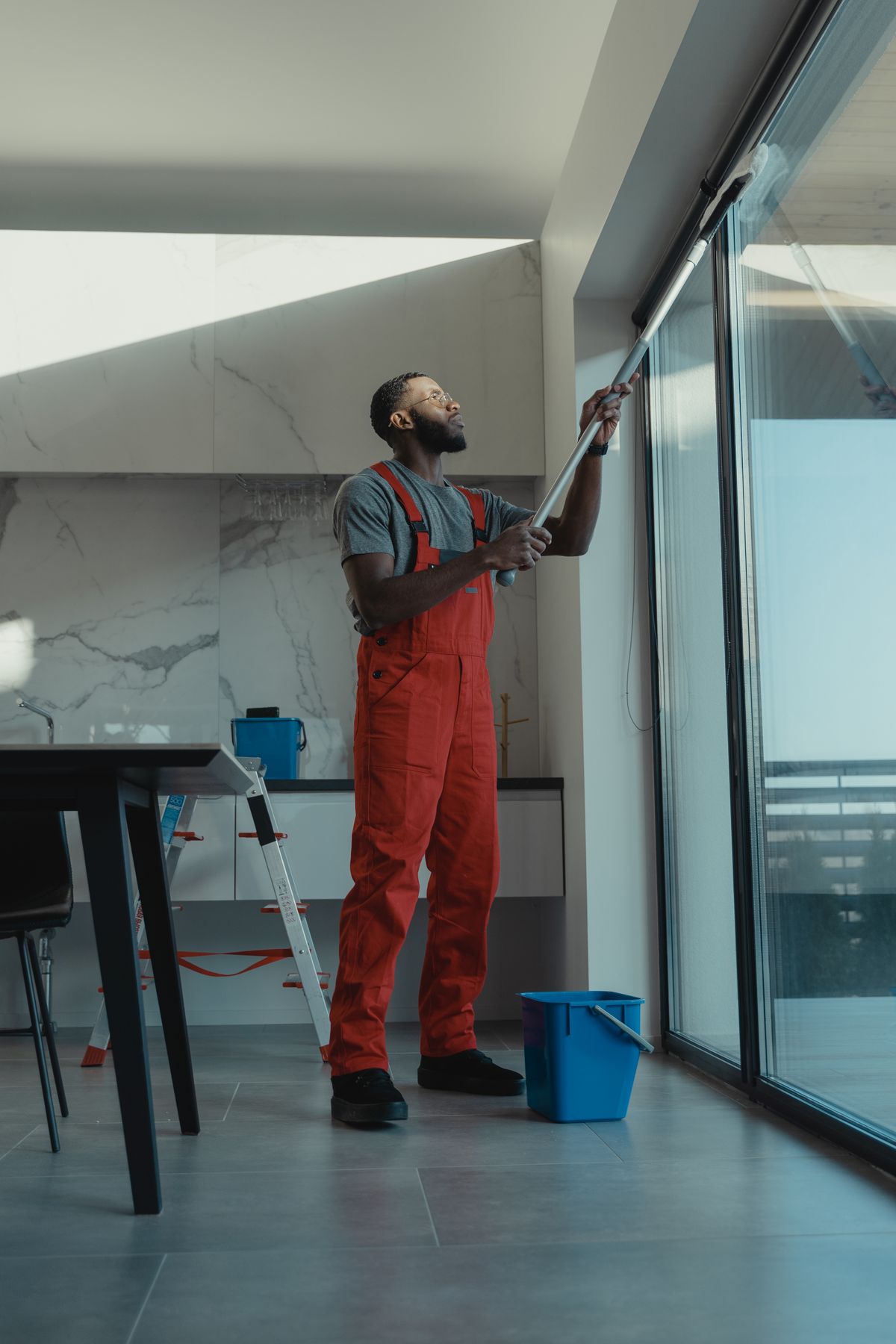
For house windows, the vinegar mix is the best glass cleaner for most people, and the one I use myself. Mix one cup of distilled white vinegar with one cup of water in a clean spray bottle, a 1:1 ratio. The vinegar is about 5% acetic acid, and that mild acid dissolves mineral marks and cuts light grease. Use distilled white vinegar only — apple cider vinegar leaves a sticky film. The full recipe is in our homemade vinegar glass cleaner recipe.
Best glass cleaner for mirrors
Mirrors want the same cleaner as windows, with one change: spray the cloth, not the mirror. Liquid that runs down into the frame can creep behind the glass over time and damage the silver backing, and that shows up as dark edges that never come off. A light spray on a microfiber cloth, wiped top to bottom and buffed dry, gives a perfect mirror with no drips.
Either the vinegar mix or a store-bought ammonia-free spray works well here. If you buy a spray, read the label before you trust the front of the bottle. Our guide to ammonia free glass cleaner shows how to spot a genuinely ammonia-free bottle from the ingredients list — if ammonia, ammonium hydroxide or ammonium chloride appear on it, put the bottle back.

Best glass cleaner for shower doors
Shower doors are a different job, because the dirt is different. The cloudy film on shower glass is soap scum — soap stuck to minerals from hard water — and a plain window cleaner barely touches it. The best glass cleaner for shower doors is a mix that can dissolve that film and sit on it: warmed white vinegar with a little dish soap.
Warm one cup of white vinegar for about 30 seconds, add half a cup of dish soap, spray the doors, let it dwell 20 to 30 minutes, scrub and rinse with hot water. For years of buildup, leave it overnight. The full method is in our vinegar for shower cleaner guide. And never mix vinegar with bleach — together they make toxic chlorine gas, so bleach is a separate job on a separate day.
Best glass cleaner for car windows
Car glass has its own rules, and the first one is about tint. If your windows are tinted, the best glass cleaner is an ammonia-free one, full stop — ammonia hazes and damages tint film over time. The vinegar mix qualifies, because it has no ammonia in it at all, and it handles bugs, exhaust film and the haze on the inside of the windshield. Add a single drop of dish soap for the outside glass if bugs are dried on — no more than that, or the soap leaves its own film.
Spray the cleaner onto the cloth, not the glass, so the mist does not settle on the dashboard. On the rear window, wipe along the defroster lines, never hard across them. The full car routine is in our auto glass cleaner guide.
How to use any glass cleaner the right way
Whatever bottle you pick, the same five steps decide the result.
Step 1: Dust first
Wipe loose dust and grit off with a dry cloth. Skipping this is how fine scratches happen.
Step 2: Spray lightly
A light mist is enough. Too much product is one of the most common causes of streaks, because the extra liquid dries before you can wipe it.
Step 3: Wipe in an S-shape
Work top to bottom in an S-shape. Straight lines beat circles, which just move the film around.
Step 4: Buff with a second dry cloth
Follow with a clean, dry cloth while the glass is still slightly damp. This is the step that turns clean into streak-free.
Step 5: Check against the light
Look through the glass toward a light. Streaks you cannot see head-on show up at an angle, and it is easier to fix them now than to notice them tomorrow.
Mistakes that ruin a good cleaner
Most streaky glass is not a bad cleaner — it is a good cleaner used badly. Cleaning in direct sun is the most common mistake: the spray dries before you can wipe it, and the dried cleaner is the streak. Paper towels leave lint and are not as absorbent as microfiber, so they smear the film around instead of lifting it. One dirty cloth is just as bad, because once it is loaded with grease it spreads grease. Use one cloth to clean and a second dry one to buff, and wash them without fabric softener. Never use an ammonia cleaner on tinted windows, even once — the damage is slow and permanent.
Buy what you need
Shop what you need: Best glass cleaner · Distilled white vinegar · Microfiber cloths for glass · Spray bottles
As an Amazon Associate I earn from qualifying purchases.
Frequently asked questions about the best glass cleaner
What is the best glass cleaner for streak-free windows?
A 1:1 mix of distilled white vinegar and water, used with two microfiber cloths — one to wipe, one dry cloth to buff. It costs under 25 cents a bottle, has no ammonia, and leaves nothing behind to streak. A store-bought ammonia-free spray is just as streak-free if you would rather not mix your own.
Is vinegar a good glass cleaner?
Yes. White distilled vinegar is about 5% acetic acid, and that mild acid dissolves mineral marks and cuts light grease. Mixed 1:1 with water, it cleans windows, mirrors and untinted car glass well. For soap scum on shower doors, warm it and add a little dish soap.
Is ammonia-free glass cleaner better?
For most homes, yes. Ammonia-free cleaners are safe on tinted windows, gentler to breathe in a closed room, and just as streak-free as ammonia cleaners on everyday dirt. Ammonia only wins on heavy grease on untinted glass, and even there the vinegar mix with a drop of dish soap usually matches it.
What is the best glass cleaner for shower doors?
Warmed white vinegar mixed with dish soap — one cup of vinegar to half a cup of dish soap. Spray it on, let it dwell for 20 to 30 minutes, scrub lightly, and rinse with hot water. Plain window cleaner will not cut soap scum, because the film is soap stuck to minerals, not dust.


Comments
Post a Comment