
Best Cleaner for Glass Shower Doors: What Actually Removes Soap Scum

Shower doors never stay clear for long. A week after a deep clean, the glass goes cloudy again — a milky film no regular window spray shifts. I used to think my shower doors were just old. They were not. I was using the wrong cleaner on the wrong kind of dirt.
The film on shower glass is not dust. It is soap scum — soap stuck to the minerals in hard water — and it needs a cleaner that can dissolve both. Here is what works on glass shower doors, the vinegar recipe I use, and what is a waste of money.
Why shower glass is a different job
Window glass gets dusty. Shower glass gets coated, every single day, in warm soapy water that dries on the surface and leaves its minerals behind. Soap is made to grab grease, and in hard water it grabs the calcium and magnesium instead, forming a sticky residue that bonds to the glass. That is soap scum — and it is why a window cleaner barely touches a shower door. It is built for dust and fingerprints, not a film that has had days to harden.
Heat makes it worse. A hot shower steams the glass and the minerals stay behind. The fix is not scrubbing harder — it is a cleaner that dissolves the film.
What the best cleaner for glass shower doors has to do
A good shower-door cleaner has to do three things. First, dissolve soap scum — that means an acid, because soap scum is alkaline and acid breaks it down. Second, stay on the glass long enough to work: a spray that runs off in seconds cannot dissolve a film that took weeks to build. Third, rinse away clean.
It also has to be safe for what is around the glass: the metal hinges, the rubber seals, and any coating on the glass itself. Harsh chemicals wear a factory water-repellent coating off. If your doors were sold as easy-clean, check the care notes before reaching for anything stronger than vinegar.
The contenders, compared
| Cleaner | Soap scum | Hard water | Effort | Cost | Best for |
|---|---|---|---|---|---|
| Vinegar + dish soap | Excellent | Good | Medium | Under 25 cents | Weekly deep clean |
| Store-bought spray | Good | Fair | Low | A few dollars | Quick cleans |
| Baking soda paste | Good | Fair | High | Pennies | Stubborn spots |
| Daily squeegee | Prevents buildup | Prevents buildup | 30 seconds | Nothing | Keeping doors clear |
| Plain window cleaner | Poor | Poor | Low | A few dollars | Not for shower doors |
The vinegar mix wins the deep clean on cost and results, and the squeegee wins the week — it stops the film forming. Store-bought sprays are fine for a quick clean, but they cost a few dollars a bottle for mostly water.

The vinegar method that actually works
This is the method from our vinegar for shower cleaner guide. It takes about half an hour, most of it waiting.
Step 1: Warm the vinegar
Warm one cup of distilled white vinegar for about 30 seconds — warm, not boiling. Warm vinegar cuts soap scum faster than cold. Use distilled white vinegar only.
Step 2: Add dish soap and spray
Stir in half a cup of dish soap, pour the mix into a spray bottle, and coat the doors inside and out. The soap lifts the grease in the scum; the vinegar dissolves the minerals. A bottle like this costs under 25 cents.
Step 3: Let it dwell, then scrub
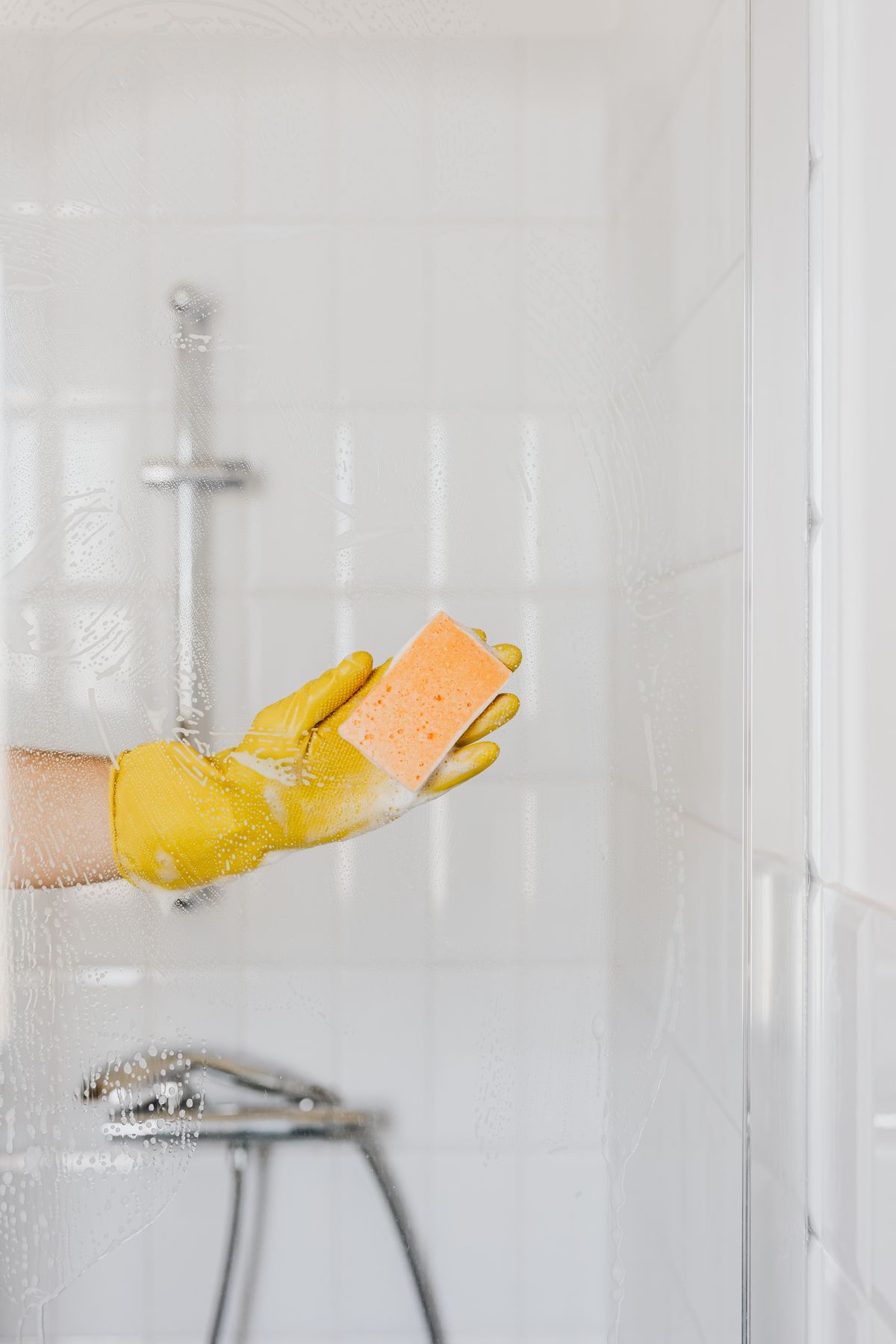
Leave it for 20 to 30 minutes. For doors not cleaned in months, leave it overnight — cover the glass with cling film so the mix does not dry out. Then scrub with a non-scratch sponge, top to bottom, and rinse with hot water. A cloudy patch that survives is usually mineral scale.
Step 4: Dry the glass
Buff the doors dry with a microfiber cloth or an old towel. Water left to dry leaves its minerals behind, which is how the film starts again.
When hard water stains will not budge
Sometimes the cloudiness is not soap scum at all. If a white, crusty patch stays put after the vinegar and dish soap treatment, it is mineral scale — calcium and magnesium bonded to the glass. Lay a cloth soaked in warm vinegar on the patch for an hour, then scrub and rinse. If it still will not move, the glass may be etched — years of hard water can pit the surface, and no cleaner fixes etching.
The 30-second habit that keeps doors clear
The cheapest cleaner for glass shower doors is a squeegee. After every shower, pull the water off the glass — about 30 seconds — before it can dry into scum. Keep the squeegee hanging in the shower; if it lives in a cupboard, nobody uses it.
If your water is very hard, a quick spray of the 1:1 vinegar and water mix after the squeegee adds extra protection. The full recipe is in our homemade vinegar glass cleaner post.
What not to use on shower doors
Skip abrasive scouring powders and green scouring pads — they scratch glass, and scratched glass holds soap scum worse than smooth glass. Skip bleach on its own: it does not dissolve soap scum, and it is dangerous near vinegar — never mix vinegar with bleach, because together they make toxic chlorine gas. Skip ammonia cleaners on coated glass. Our ammonia free glass cleaner guide explains how to read a label before you trust it.
Buy what you need
Shop what you need: Shower squeegee · Distilled white vinegar · Spray bottles · Microfiber cloths for glass
As an Amazon Associate I earn from qualifying purchases.
Frequently asked questions about the best cleaner for glass shower doors
What is the best cleaner for glass shower doors?
A warm mix of white vinegar and dish soap — one cup of vinegar to half a cup of dish soap, left on the glass for 20 to 30 minutes, then scrubbed and rinsed. It dissolves both parts of soap scum and costs under 25 cents.
How do I remove hard water stains from glass shower doors?
Soak a cloth in warm distilled white vinegar, lay it on the stain for an hour, then scrub with a non-scratch sponge and rinse with hot water. If the mark still will not move, the glass may be etched, and no cleaner will remove it.
Can I use vinegar on glass shower doors every day?
Yes, a light spray of equal parts vinegar and water is safe for daily use on plain shower glass. Do not use it on natural stone or marble, because vinegar etches stone. And never mix vinegar with bleach.
How do I keep glass shower doors from getting cloudy?
Squeegee the doors after every shower — about 30 seconds — so soapy water never dries on the glass. Deep-clean with the vinegar and dish soap mix once a week, and dry the glass after rinsing.


Comments
Post a Comment