
Best Window Washing Solution: The Homemade Mix That Beats Store-Bought Sprays
Walk past a window on a sunny day and you can tell in a second whether it was washed well. A good wash leaves glass you forget is there; a bad one leaves streaks and a faint film that shows up the moment the sun hits it. I have tried the store-bought blue sprays, the foams, plain water, and the vinegar mix from my own kitchen, and the difference between them is smaller than the labels suggest. What matters is what the solution leaves behind. Here is how they compare, the recipe I use, and the mistakes that turn a good solution into streaks.
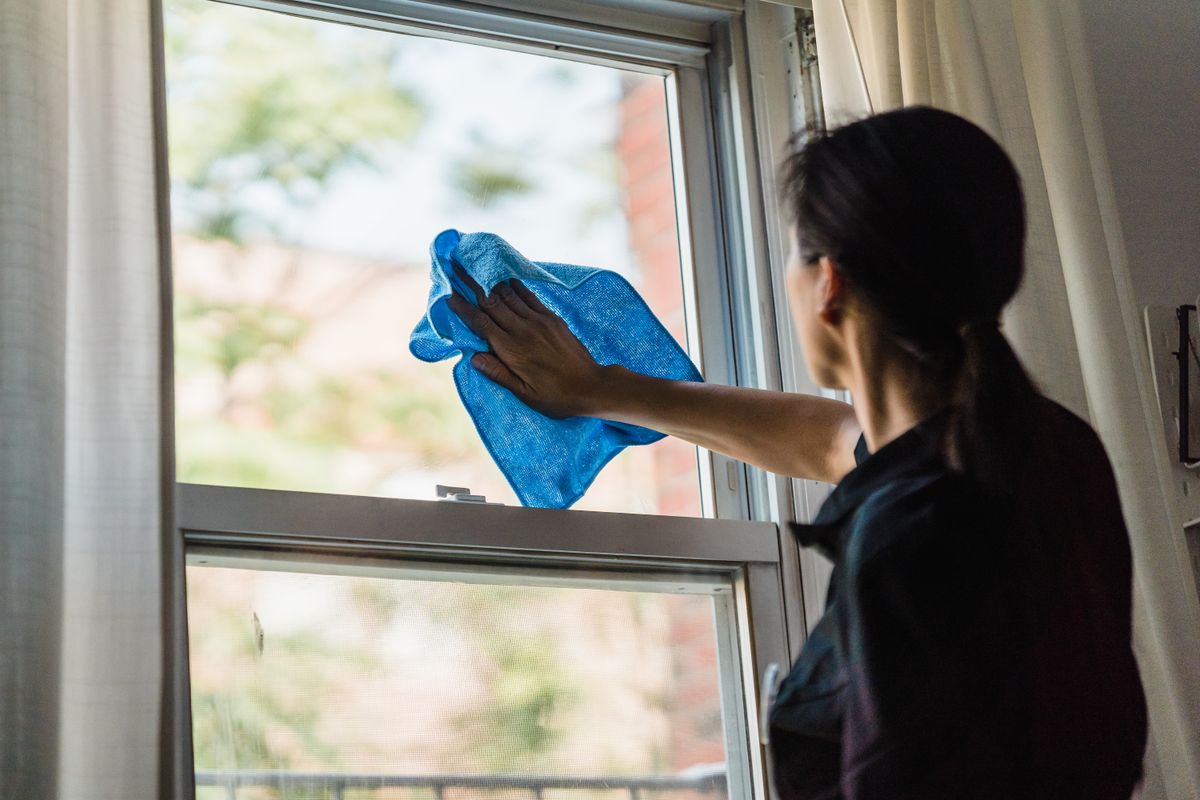
What makes a window washing solution the best?
A window washing solution has one job: lift dirt off the glass and leave nothing behind. A cleaner that leaves its own film behind is just swapping one kind of dirt for another, and that film is what you see as streaks in sunlight.
A good solution needs four things: something that cuts grease — the thin oily film from cooking, traffic, and fingerprints; something that dissolves mineral marks from hard water and rain; no residue of its own when it dries; and safety for window tint, mirror backing, and any coating on the glass.
Most of a store-bought bottle is water — around 80 to 90 percent, as our guide to what is really inside a bottle of glass cleaner explains — so you are mostly paying for packaging and scent. A homemade solution costs under 25 cents a bottle.
The contenders, compared
Almost every window washing solution falls into one of four groups:
| Solution | Grease | Minerals | Streaks | Cost | Best for |
|---|---|---|---|---|---|
| Vinegar + water (1:1) | Good | Excellent | Very few | Under 25 cents | Everyday windows |
| Vinegar + dish soap (1 drop) | Excellent | Excellent | Few | Under 25 cents | Greasy windows |
| Store-bought spray | Good | Fair | Few | A few dollars | Quick cleans |
| Plain water + microfiber | Poor | Poor | Few | Almost nothing | Light dust |
For everyday windows, the vinegar mix wins on cost and results. A single drop of dish soap turns it into the best choice for greasy glass. Store-bought sprays are fine for quick cleans, but they cost a few dollars for mostly water. Plain water works for light dust only — it cannot cut grease or dissolve mineral marks.

The best window washing solution: my recipe
This is the solution I use on my own windows, inside and out. It takes five minutes to mix, using the same 1 to 1 ratio as our homemade vinegar glass cleaner recipe. Distilled white vinegar is about 5% acetic acid, and that mild acid is what dissolves mineral marks and cuts light grease. Use distilled white vinegar only — apple cider vinegar leaves a sticky film.
Step 1: Mix it
Pour one cup of distilled white vinegar and one cup of clean water into a spray bottle. For greasy windows, add a single drop of dish soap — no more, or the soap leaves its own film. Shake gently.
Step 2: Dust first
Wipe loose dust and grit off the glass with a dry cloth. Skip it and grit dragged across the glass acts like sandpaper.
Step 3: Spray lightly
Spray a light mist over the glass. A light mist is enough — too much solution is one of the most common causes of streaks, because the extra liquid dries before you can wipe it.
Step 4: Wipe in an S-shape, then buff dry
Work top to bottom in an S-shape with a microfiber cloth. Straight lines beat circles, which just move the film around. Follow with a second clean, dry cloth while the glass is still slightly damp. This is the step that turns clean into streak-free. Wash cloths without fabric softener — it coats the fibres and leaves smears.
When a different solution wins
The vinegar mix is the best window washing solution for most windows, but not every window is most windows. Greasy kitchen windows want the dish-soap version. Windows with hard-water spots need the vinegar left on longer: spray, wait a few minutes, then wipe. Tinted windows need an ammonia-free solution, and the vinegar mix qualifies — ammonia hazes tint film over time. Our ammonia free glass cleaner guide shows how to read a label before trusting it. And never mix vinegar with bleach — together they make toxic chlorine gas.
Mistakes that leave streaks
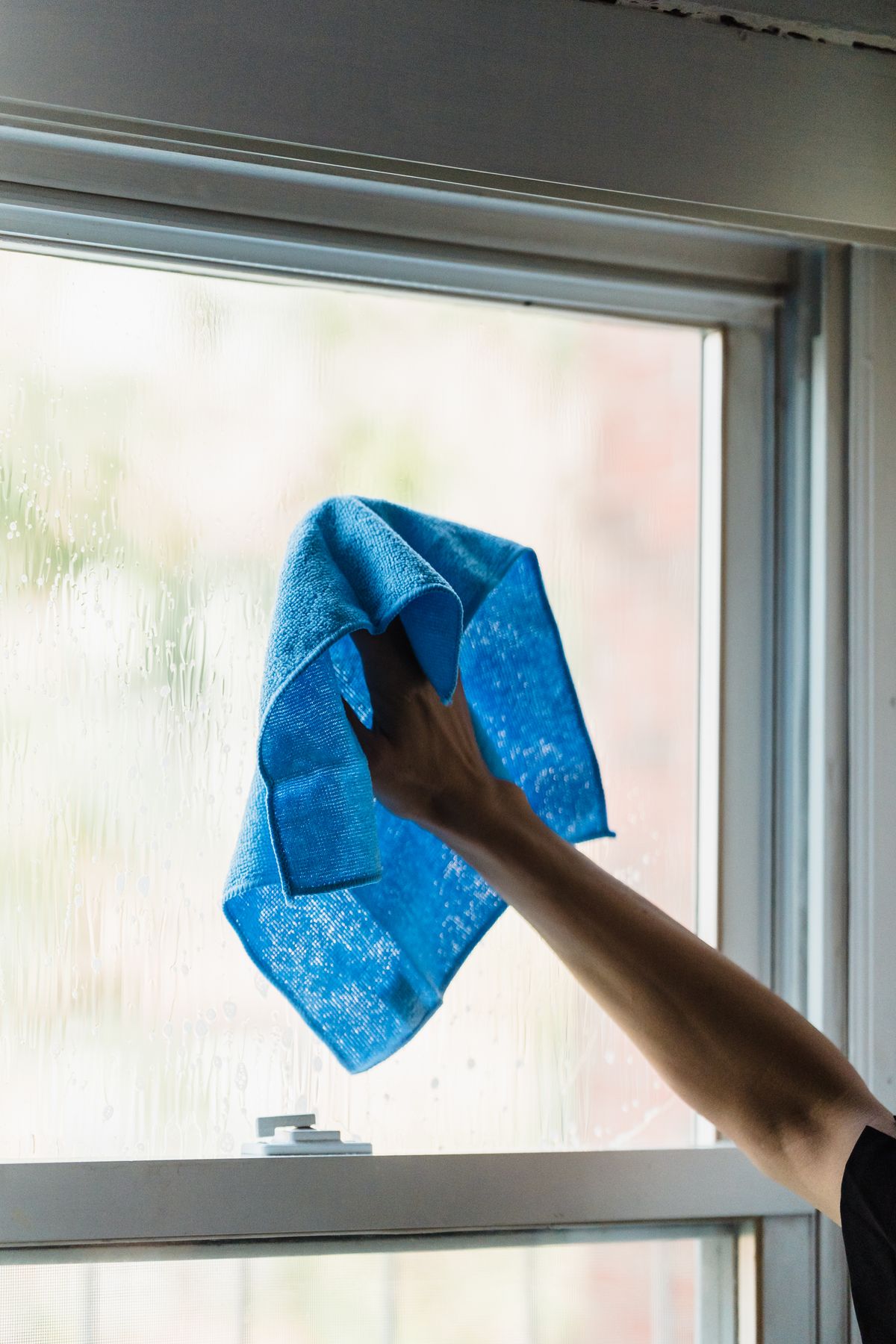
Most streaky glass is not a bad solution — it is a good solution used badly. Cleaning in direct sun is the most common mistake: the spray dries before you can wipe it, and the dried cleaner is the streak. Wash windows on a cloudy day, or in the morning before the sun hits them. Paper towels leave lint and smear the film around — use microfiber. One dirty cloth spreads grease once it is loaded with it. Use one cloth to wash and a second dry one to buff. Check your work against the light: streaks you cannot see head-on show up at an angle.
Buy what you need
Shop what you need: Window squeegee · Distilled white vinegar · Spray bottles for cleaning · Microfiber cloths for glass
As an Amazon Associate I earn from qualifying purchases.
Frequently asked questions about the best window washing solution
What is the best window washing solution?
A 1 to 1 mix of distilled white vinegar and water, used with two microfiber cloths — one to wash, one dry cloth to buff. It costs under 25 cents a bottle, has no ammonia, and leaves almost nothing behind to streak. For greasy windows, add a single drop of dish soap.
Can I use vinegar to wash windows?
Yes. Distilled white vinegar is about 5% acetic acid, and that mild acid dissolves mineral marks and cuts light grease. Mixed 1 to 1 with water, it cleans house windows, mirrors, and untinted car glass. Do not use it on natural stone or marble, because vinegar etches stone.
Why do my windows streak after washing?
The usual cause is the solution drying before you wipe it — washing in direct sun is the most common mistake. Too much product, paper towels, and a dirty cloth cause streaks too. Use a light mist, wash in the shade, and buff dry with a second clean cloth.
What is the best window washing solution for hard water spots?
The same vinegar mix, left on the glass for a few minutes before wiping, so the acid has time to dissolve the mineral marks. For stubborn spots, lay a warm vinegar-soaked cloth on the mark for an hour, then scrub gently and rinse.


Comments
Post a Comment