
How To Make Glass Cleaner With Vinegar ?
Join me today as I tell you how to make glass cleaner with vinegar for the whole family. Natural, non-toxic, absolutely safe. Hi everybody! Welcome to my blog again. I am so glad to have you here with me to show you how to clean your natural glass. It is so simple, and it uses ingredients you can easily find cheap at the supermarket.
And this post is about the bottle itself. Not just the recipe, the bottle. Which one, how to mix in it, how to label it, how long the cleaner lasts in it, and how to spray with it. The full step-by-step recipe is in How to Make Glass Cleaner from Vinegar, and the ratio is in Glass Cleaner Vinegar and Water. Here, it is the spray bottle that does the work.
One safety line first, and it is in every post on this blog for a reason: never mix vinegar with bleach. That makes toxic chlorine gas. Not in the bottle, not in the bucket, not anywhere.
What You Need: Choosing the Right Spray Bottle
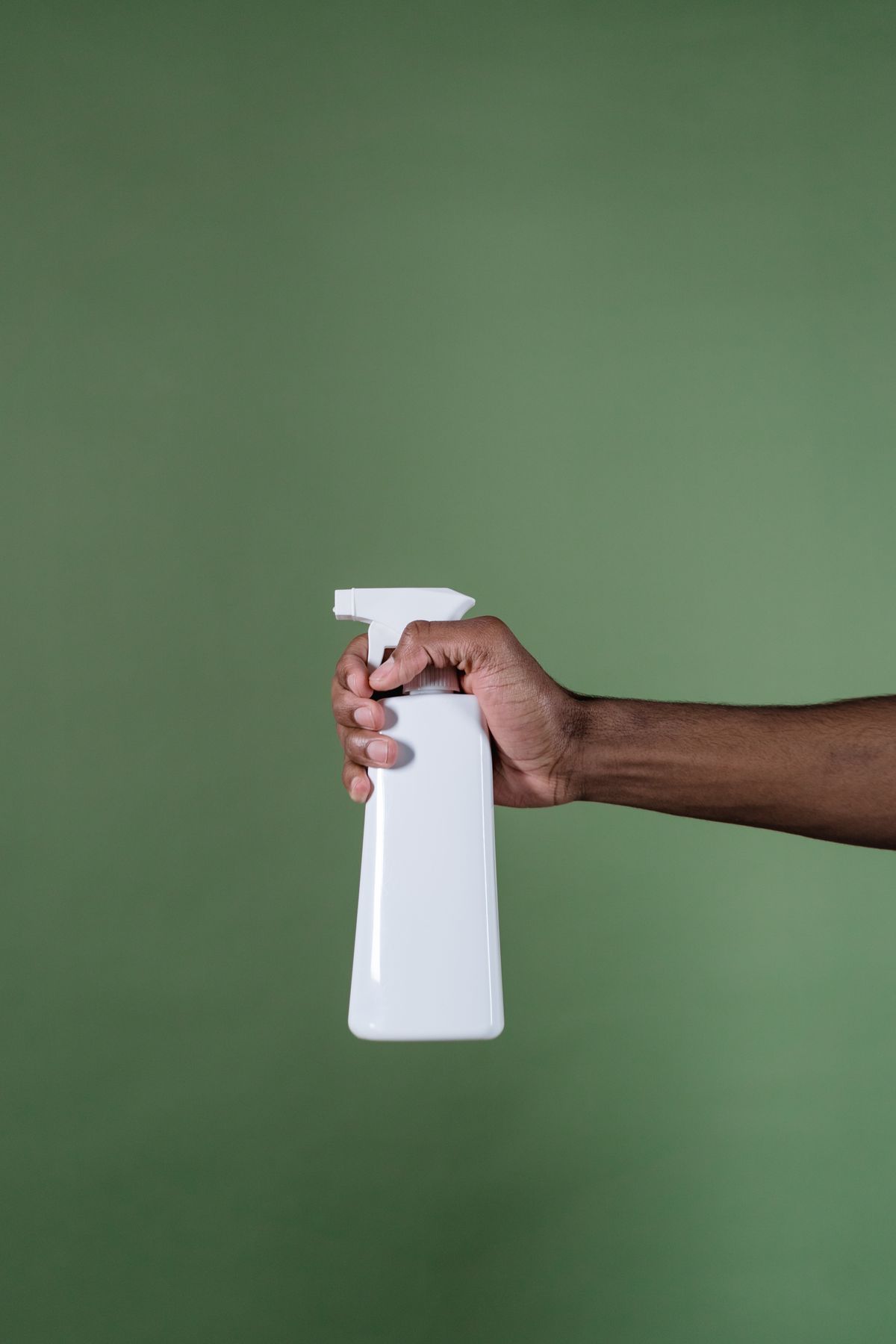
The bottle is not an afterthought. It is the thing you hold every time you clean. Get it wrong and the cleaner leaks, or the sprayer clogs, or the oil eats the plastic.
- Glass spray bottle. The best choice for vinegar cleaner, especially if you are adding essential oils. Glass does not react with the oil, it does not leach, and it lasts. The original recipe on this post used glass spray bottles, and for good reason.
- Plastic spray bottle. Cheaper, and lighter, and it will not smash if you drop it. But it has to say HDPE or PETE on the bottom. That means it is a strong enough plastic that can withstand essential oils or harsh cleaners. If it does not say HDPE or PETE, do not put essential oils in it.
- Amber or dark bottle. If you are using essential oils, use a dark bottle. Light breaks essential oils down, and a dark bottle protects them. That is the whole reason for the amber glass.
- Size. A 16-oz bottle is the everyday size, and it is what the 1 cup plus 1 cup recipe fills. A 32-oz bottle is for big jobs and big houses. A 2-oz bottle is for travel, or for trying a new mix before you commit to a full bottle.
- A silicone sleeve. Optional, but nice. It stops the glass bottle from slipping out of a wet hand, and it stops it from clinking around in the cupboard.
- A funnel. For getting the vinegar into the bottle instead of all over the counter.
- A label and a marker. Not optional. See below.
Colour-code your bottles, too, if you have more than one homemade cleaner. One colour for the glass cleaner, another for the bathroom, another for the kitchen. You will thank yourself later, when you are reaching under the sink in a hurry.
The Quick Recipe for the Bottle
Summary only. The full recipe is in Post 12, and the ratio table is in Post 14. The short version: 1 cup of distilled water and 1 cup of white vinegar, 1 to 3 drops of dish soap, and 20 drops of lemon essential oil, in a 16-oz spray bottle. That is 1:1. The original recipe on this post was a smaller batch: half a cup of water and 1/2 cup of Distilled White Vinegar, with 10 to 15 drops of essential oils. Today I use Citrus Fresh, a combination of lemon, grapefruit, and orange. And it is that simple.

How to Mix Glass Cleaner in a Spray Bottle, Step by Step
1. Add water first
Pour the water in first, through the funnel. Water first means the vinegar and the soap mix into it, instead of sitting on the bottom. Half a cup for the small batch, 1 cup for the 16-oz bottle.
2. Add vinegar
Then the vinegar. Half a cup for the small batch, 1 cup for the 16-oz bottle. Same amount as the water. 1:1. That is the ratio, and the ratio post explains why.
3. Add soap or alcohol
A drop or two of dish soap if the glass is greasy. Or rubbing alcohol if you want it to dry fast. Not both in big amounts. And not a squirt of soap. Drops. Too much soap films and streaks.
4. Add essential oil
Ten to fifteen drops of essential oil for the small batch, 20 drops for the 16-oz bottle. Lemon, grapefruit, orange, or the Citrus Fresh combination. This is for the smell. Vinegar can be stinky, and the oil compensates for the smell. Do not use essential-oil blends around cats or dogs. More on that below.
5. Seal, shake and prime the sprayer
Put the top back on, close the bottle, and shake it well. Then prime the sprayer with a couple of pumps into the sink, so the tube is full and the spray comes out even. Leave a little headspace at the top for the soap and the oil, and so the bottle does not overflow when you shake it. If you are using cornstarch, dissolve it first before you add it, or it will clump and clog the sprayer.
And never reuse a bottle that held another cleaner without cleaning it first. Old cleaner residue, especially bleach or ammonia, mixed with vinegar is exactly how people get hurt. Wash the bottle out, dry it, then fill it.
A Small 2-oz Batch
For travel, or for trying a new mix. Simply Earth's 2-oz Shine Spray is the model: 1/4 cup of vinegar and 20 drops of essential oil, in a little 2-oz bottle. Same 1:1 idea, smaller bottle. Make it fresh, use it up, make another. Small batches are the whole point of this cleaner, because there are no preservatives in it.
How to Use the Spray: Technique for Streak-Free Glass
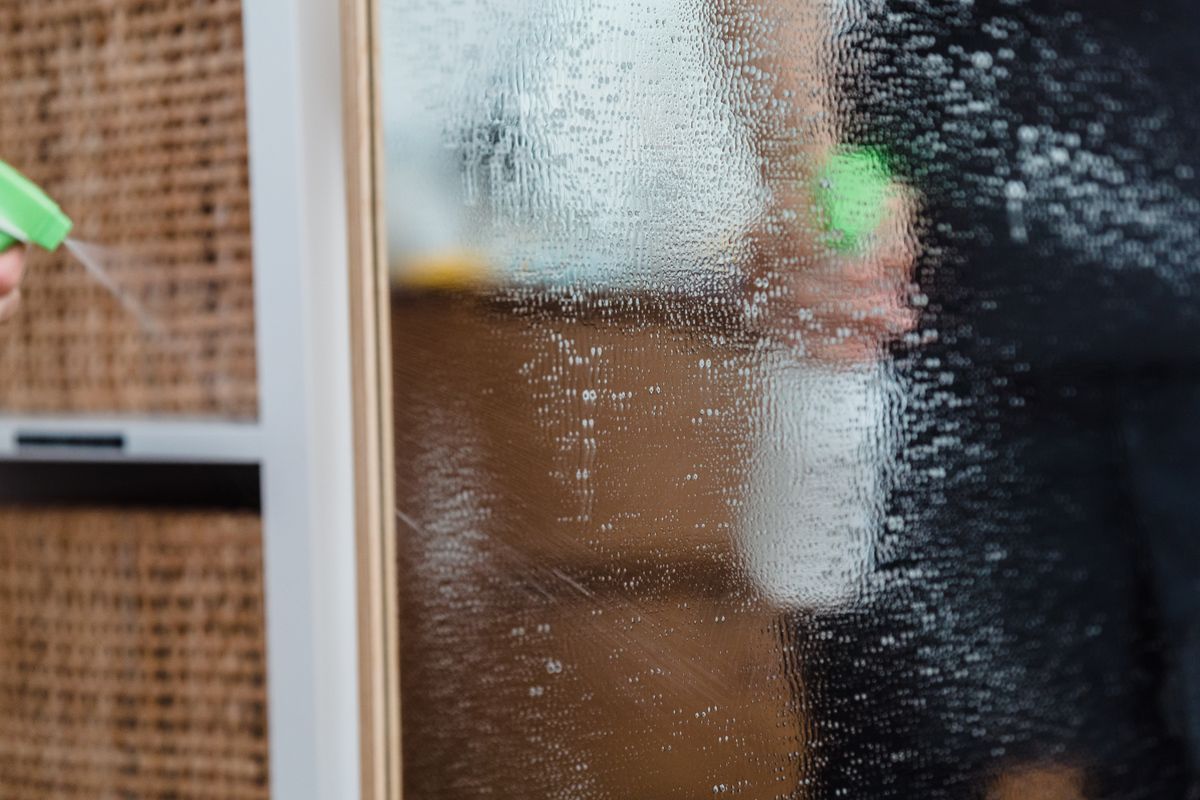
A light mist, from 6 to 8 inches away. Not a soaking blast. Work in an S or Z pattern across the glass, so you do not miss a strip, then wipe with a clean microfiber cloth and buff dry. Do not overspray. More cleaner does not mean cleaner glass. It means more to wipe off, and more streaks.
Clean on a cloudy day, or when the glass is cool. Direct sunlight and hot glass dry the cleaner before you can wipe it, and that is how streaks happen. And for mirrors, spray the cloth, never the mirror. Liquid running down behind the glass damages the silver backing.

How to Label Your Bottle
Write the date and the ingredients on the bottle, every time you fill it. And write not for marble or granite on it too, so nobody grabs the wrong bottle for the wrong surface. Functional labels are the point: you do not have to look up the recipe when you go to fill this bottle, and nobody else has to guess what is in it. A marker on masking tape works. A proper label works better. Either way, label it.
How to Store Homemade Glass Cleaner
Cool, dark, capped. Out of sunlight, under the sink or in a cleaning caddy, away from children and pets. Keep it away from heat, and keep the cap on, so the vinegar does not evaporate and the sprayer does not dry out. Make small batches, because there are no preservatives in this. And start with clean, sterilised containers. A dirty bottle is a bottle full of whatever was in it before, and that is not what you want in your cleaner.
Never store it in an unmarked container, and never store it in a food or drink container. A vinegar cleaner in a water bottle is an accident waiting to happen. Labelled spray bottle, or nothing.
How Long Does Homemade Glass Cleaner Last?
It depends on what is in it. And the sources disagree, so here is the honest version, with the shortest safe figure for each recipe.
- Plain, water and vinegar only: 6 to 12 months. Anderson and Grant say distilled water keeps 1 year and more, and vinegar preserves it. Mothers Always Right say 6 to 12 months. Use the 6 to 12 months figure, and make a fresh bottle when in doubt.
- With fresh lemon juice: 5 to 7 days. Fresh juice goes off fast. Use it up, or leave the fresh juice out.
- With cornstarch: 1 to 2 weeks. Shake before every use, and do not keep it past two weeks.
- With dish soap: 1 to 2 months.
So the plain bottle lasts months. The fancy bottle lasts days. That is the trade, and it is why small batches win. When in doubt, make a fresh bottle. It takes two minutes.

What Else the Same Spray Bottle Cleans
Windows, mirrors, shower glass, of course. But the same bottle also works as a dusting spray, and as a stainless-steel fingerprint spray. Wipe, buff, done. And it works as an all-purpose cleaner on sinks, counters and faucets. One bottle, a lot of jobs. That is the point of making your own.
And the original post had two other recipes in it, so here they are, kept as they were. Hydrogen peroxide and water: one and a half cups of hydrogen peroxide to a half cup of water is the same formula. The only thing is that it does not get off stains and smudges very well, so first you will have to use rubbing alcohol to remove the smudges and stains or spots off your glass, and then use your spray. That is a non-smelly alternative, if you really hate the smell of vinegar. I personally like having an all-in-one solution, and I am sure you do too.
And the other one is Thieves Household Cleaner, from Young Living. It is biodegradable, non-toxic, and contains essential oils such as cinnamon, lemon, clove, and rosemary eucalyptus. When you vacuum it smells like Christmas, and it is a great window glass cleaner. You can also clean any other surface inside your home with it. All you would need is two cups of water, and one capful of it. And it is really simple, and since the essential oils are already in there, you do not have to add any.
Why Make Your Own, Instead of Buying Windex?
Well, first of all, making your own is way cheaper, and you will save a lot of money. You are also saving the environment, because you can buy stuff in bulk, like this gallon of vinegar, and you are refilling your bottles instead of continuing to buy more plastic bottles, so you can save the environment. And I still like this sort of thing.
Then the second reason you want to make glass cleaner at home is because the glass cleaners in the stores contain poisonous chemicals. Yes, harmful substances. Artificial fragrances are one of the toxins in glass cleaning, and you will find them in absolutely everything on the market today. They are giving me headaches, they are making me sick. I do not like products with synthetic perfumes in them, and many people are also reacting to them. The reason is that artificial fragrances are bound together by plastic naphthalene particles. When we spray, when we use these artificial fragrance products, we breathe in those tiny plastic particles, and you can imagine what that could do for your respiratory system. Our bodies are not fond of plastics. We do not want plastic inside of us! And so, we respond to plastic particles: asthma, allergies, headaches, brain fog, confusion, mood disorders, all sorts of things!
So it is a super easy thing to get these out of your home, and you can also replace them easily with essential oils, which are a much healthier option to have fragrance at home. There is also almost always some formaldehyde inside artificial fragrances, which is a toxin. The other two toxins in window cleaners, especially glass cleaners, are ammonia and bleach, and they are generally considered dangerous, so you want to stay away from that stuff. When you spray chlorine and ammonia around your house, together with the artificial fragrances, you will breathe that. So it is no wonder people get sick when they clean their homes, or you may notice that after cleaning your home everybody has some allergies and discomfort, and that is because of those toxic chemicals. People who clean for a living have massive health problems, especially problems with respiratory health. They are very poisonous, and they can irritate the respiratory system in the same way as chemical fragrances do, when it comes to ammonia and chlorine.
Safety Notes
Ventilate the room when you clean. Open a window, or at least a door. Do not use essential-oil blends around cats or dogs. Essential oils are not safe for pets, and cats and dogs react to them badly, so keep the oiled bottle away from them, and do not spray it in a room where they are sleeping. Never store cleaner in food or drink containers. Never mix vinegar with bleach, and never mix it with ammonia. And never use vinegar cleaner on marble or granite, tinted windows, wood finishes, electronic screens, or eyeglasses. Vinegar glass cleaner is for windows and mirrors, and that is where it stays.
Will my house smell like vinegar after using it? For a little while, yes. And then it fades as it dries. That is the honest answer. The essential oil helps, and so does a light mist instead of a soaking spray. The smell goes. The clean glass stays.
Spray Bottles | |
|---|---|
| Best for | Holding and spraying homemade vinegar glass cleaner |
| Why this post recommends it | The bottle is not an afterthought — it is the thing you hold every time you clean |
| Pros |
|
| Cons |
|
| Price | Check price on Amazon |
FAQs
How long does homemade glass cleaner last in a spray bottle?
The plain mix, water and vinegar, lasts 6 to 12 months in a capped bottle in a cool, dark place. With fresh lemon juice, 5 to 7 days. With cornstarch, 1 to 2 weeks. With dish soap, 1 to 2 months. Make small batches, date the bottle, and make a fresh one when in doubt.
Should I use a glass or plastic spray bottle for vinegar cleaner?
Glass is best, especially with essential oils, because glass does not react with the oil. Plastic is cheaper and lighter, but it has to say HDPE or PETE on the bottom. That means it is a strong enough plastic to withstand essential oils or harsh cleaners.
Why should I use an amber or dark spray bottle?
Light breaks essential oils down. An amber or dark bottle protects the oils from light, so the cleaner keeps its scent and its strength for longer. If you are not using essential oils, a clear bottle is fine.
How do I label and store homemade glass cleaner safely?
Write the date and the ingredients on the bottle, and add not for marble or granite. Store it cool, dark and capped, under the sink or in a cleaning caddy, away from children and pets. Never store it in an unmarked container, or in a food or drink container.
Will my house smell like vinegar after using it?
For a little while, yes. The vinegar smell fades as it dries. Essential oils help, and so does a light mist instead of a soaking spray. The smell goes, and the clean glass stays.
As an Amazon Associate I earn from qualifying purchases.


Comments
Post a Comment